
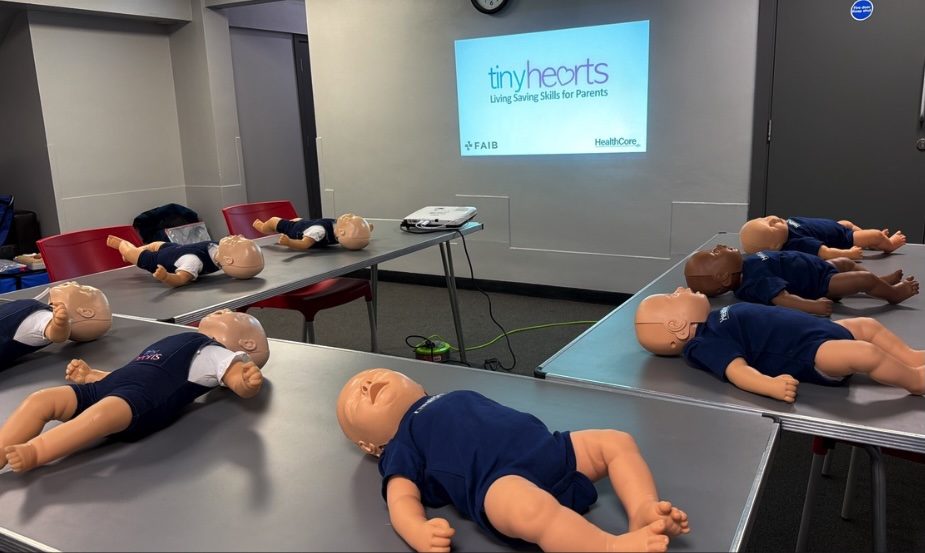
It is a minefield out there. Hundreds of Baby and Child First Aid providers all offering something slightly different. We know we may not be right for you but here are some thing you should look for.
Who is teaching the class?
The biggest difference between courses isn't the price or the venue. It's who stands at the front of the room.
Some baby first aid classes are taught by people who've completed a train-the-trainer course or paid into a franchise. They follow a script. They've never actually used any of these skills on a real person.
Others are taught by registered nurses, paramedics or doctors who deal with real-life emergencies in their day job. Nurses who've done CPR for real. Who have seen a choking baby or a child with sepsis. They treat the scenario training differently because they've lived it and can offer genuine hints and tips.
You want the second group. Ask who your instructor is and what their clinical background looks like. If they can't give a clear answer, that's an answer in itself.
How much hands-on time you get?
You can watch a video of someone doing baby CPR. You can read the steps. But when your baby is actually choking, muscle memory matters more than remembering a bullet list.
A good baby first aid class gives you time on the manikin. Real practice with feedback. You should leave with your hands having done the movements, not just your ears having heard them.
Ask about class size. If they're taking 20+ parents in a room with two manikins, you're not getting hands-on practise. You're queuing. Look for a class with small groups and plenty of manikins.
Does the content match what you actually need?
Some baby first aid classes stick to the absolute basics - choking, CPR, done. They're teaching to a script and that script doesn't change.
But think about what you're actually worried about as a parent. It's not just choking. It's the febrile seizure at 2am. It's the allergic reaction you've never seen before. It's knowing the difference between a rash you can ignore and a rash that means meningitis.
A good class covers more than the minimum. It should cover the scenarios that keep parents awake at night. Head injuries. Burns. Fever. When to worry and when not to.
Ask what's actually on the syllabus before you book.
Can they answer your questions?
A scripted class is fine until you ask something that isn't on page 7 of the binder.
Real instructors can go off script. You ask "what is the difference between an infection and sepsis?" and they don't pause. They've seen it. They can tell you.
Watch for this when you're looking at a class. Do they take questions during the session or ask you to save them for the end? Do they give textbook answers or real examples? Can you email after the class with something you forgot?
The ones who can answer the hard questions are the ones who've dealt with the hard stuff. Everyone else is just reading aloud.
Are they offering useful skills? Not just warm and cuddly.
Some baby first aid classes feel good. You sit in a nice room, watch a video, get a certificate and a cuppa. You leave feeling like you've done something important.
A useful class leaves you with muscle memory, not just good feelings. You should practise the movements until they're automatic. You should be challenged. You should be told when you're doing it wrong. It should feel a bit uncomfortable - that's how you know you're learning.
The goal isn't a nice afternoon out. The goal is that if the worst happens, your body knows what to do before your brain catches up. Ask if the class tests your skills or just shows you a slideshow.