
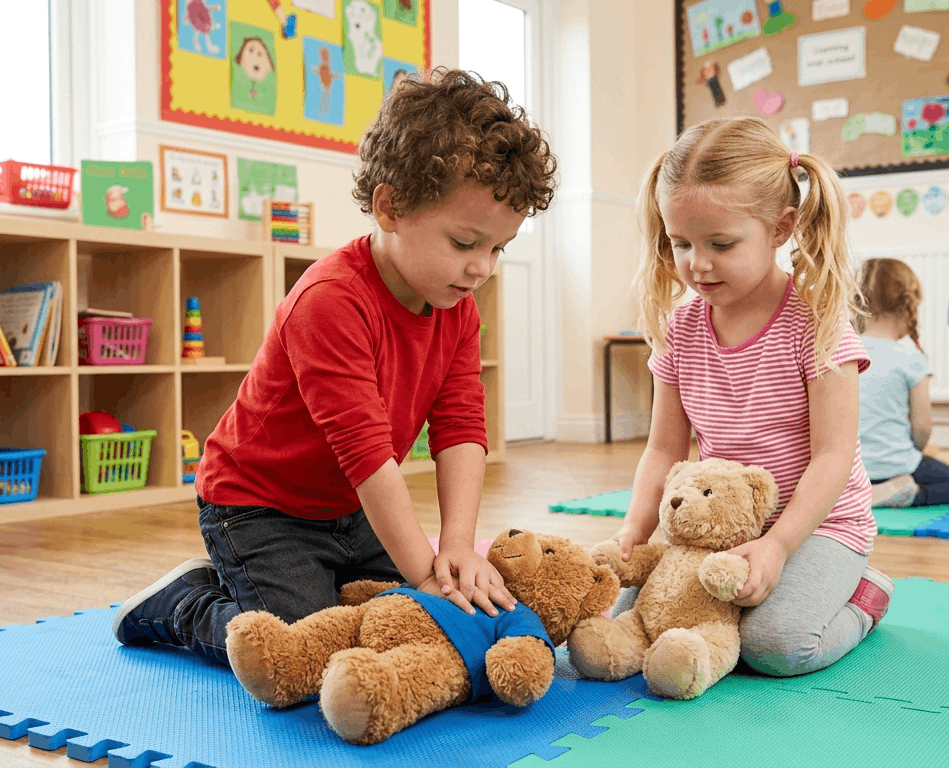
We run a lot of first aid sessions for children. The part parents assume they already know how do is calling 999. They often don't.
Four and five year olds can unlock a tablet, find YoutTube and their favorite Miss Rachel epside but ask them to open a mobile, find the keypad, dial 999 and you'll find out very quickly they struggle.
While we teach CPR to children at a young age it is more about exposure and making it less scary rather than about resuscitation.
The NHS is clear that 999 is for when you think someone's life is at risk. Children can make that call, we have seen children as yound as 3 years old doing it. They just have to have practice.
What children actually get stuck on
Locked phones. We all lock our mobile phones. On a modern iPhone or Android you can still make an emergency call from the lock screen. Show them on the phone they would actually use, not a toy.
They don't know the address. They might know "Nanny's" or "near the park". Use tools like What 3 Words and writing the house number, street and town on a card on the fridge. Practice with them saying it out loud until it is boring.
They hang up. A lot of children think their all done once they have called 999. Tell them the friendly operator will keep asking questions and they should not put the phone down until they are told they can.
They call for the wrong things, or they freeze on the right ones. A scraped knee is not 999. A grown-up who will not wake up is. So is someone who is choking and cannot breathe, or a fire in the house. If they are not sure, they can say they need an ambulance. The call handler will sort the rest.
What to actually show them
Don't turn it into a lecture. Sit down with the phone you keep at home and go through it once, then again a few weeks later.
- The number is 999.
- They will be asked which service: ambulance, fire or police.
- Where they are. House number, street, town. Or "I don't know, but we live near..." if that is all they have.
- What has happened. "A grown-up has fallen over and they will not wake up" is enough to start.
- Stay on the line. The operator is trained to talk to children. They will keep asking until they have what they need.
If you live close to others explaining to go and find help from Dave or Shiela next door is important too but not if it would put them at risk.
Practise without making a real call
Do not let them practise on a live phone. Accidental 999 calls happen. If they do get through by mistake, stay on the line and say so. Hanging up is worse, because someone still has to check the call.
We built a pretend 999 call for this, because it kept coming up in sessions. It is a browser game. They pick ambulance, fire or police, give an address, and answer operator questions. Nothing is dialled and nothing leaves the device.
Put your real address in the settings if you want. That is the bit they forget, and it is the bit that wastes the most time on real calls.
Be explicit with them: the game is pretend. The real 999 is not a game.
Teddy Bear CPR and Mini Medics
We run special CPR and First Aid sessions for children.
Some children take this in better with a teddy on the floor and a group around them than from a parent at the table. We run two sessions for that. Both are taught by healthcare professionals.
Teddy Bear First Aid and CPR is an hour, for ages 4 to 8. They bring a teddy. Buddy the Bear leads it. We cover spotting danger, checking if someone is awake, calling 999, rolling them onto their side if they are breathing (they call it Superhero Sleep), and simple chest compressions on the teddy. Parents bring a phone, because we use the same 999 practice app in the room.
Mini Medics First Aid and CPR for Kids is three hours, for ages 7 to 11. More first aid: bleeding, choking, a proper look at CPR and defibrillators, and the 999 call with more detail. Better for schools, clubs, and children who have outgrown the teddy session. Still taught to Resuscitation Council UK guidelines. Still not a professional certificate.
We deliver both in schools, nurseries and clubs, and as booked group sessions.